

How MoneyHash Works
Overview
MoneyHash is a payment orchestration platform - a single integration that connects your business to every payment provider, method, and revenue capability you need. You build once, and MoneyHash handles the complexity of working with each provider behind the scenes.
At its core, MoneyHash sits between your business and your payment providers:
Merchant → MoneyHash → Provider
Instead of integrating each payment provider, wallet, and payment method on its own, you connect to MoneyHash once. Every provider you add afterwards is set up in the dashboard - not built from scratch in your code.
For your team, that means:
- Single API - one way to create and manage payments, whichever provider processes them.
- Single SDK - one client SDK (Web, iOS, Android, React Native, Flutter) for the checkout experience.
- One consistent result - every payment comes back to you the same way, no matter which provider handled it.
- One dashboard - all of your providers, methods, and accounts in a single place.
This is what we mean by a complete payment operating system: the merchant → MoneyHash → provider flow is the foundation, but the platform does far more than pass payments through.
The three roles
| Party | What it is | What it owns |
|---|---|---|
| Merchant | Your business and application. | The customer experience and the commercial relationship with each provider. |
| MoneyHash | The orchestration layer - the rails your payments run on. | The single API & SDK, routing each payment to the right provider, and the value-added services on top (vault, subscriptions, wallets, analytics, and more). |
| Provider (PSP) | The payment processor that actually moves the money. | Processing the transaction. The merchant keeps the direct relationship with the provider. |
One integration, every provider
Your application connects to MoneyHash once. From that single connection, MoneyHash reaches every provider you've set up - and decides, for each payment, which one should process it.
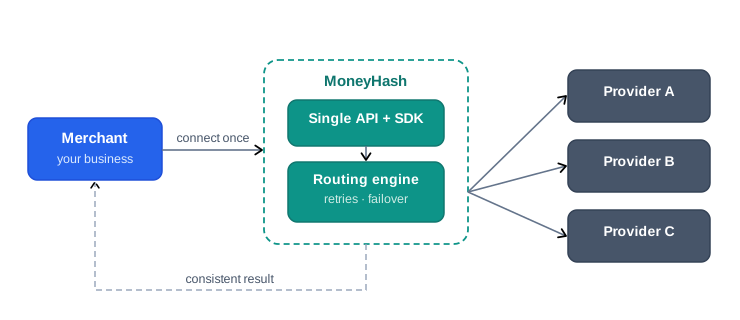
Read the diagram in three moves:
- One integration in. You connect to a single API and SDK. You never write provider-specific code - adding Provider B or Provider C later doesn't change your setup.
- MoneyHash decides where it goes. Your routing rules pick the provider for each payment. If that provider is unavailable, MoneyHash can automatically retry or fail over to another. This is the difference between orchestration and a simple gateway: the link between MoneyHash and your providers is flexible, not a fixed pipe.
- One consistent result back. Whichever provider processes the payment, the result comes back to you the same way every time - so your setup stays identical across all of them.
The takeaway: adding a new provider, or changing which one handles a payment, is a configuration change - not a new build.
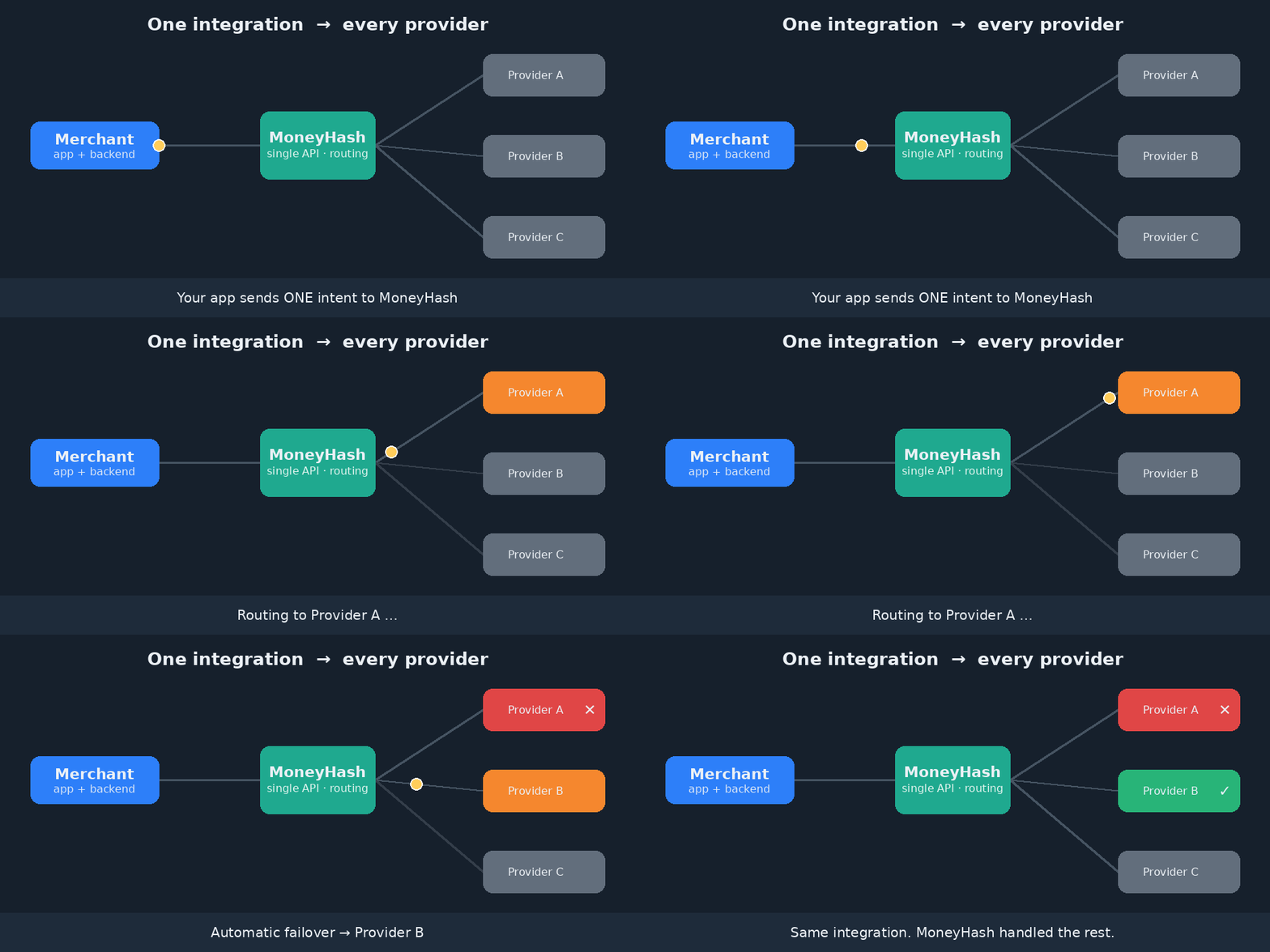
Failover in motion
The animation below shows the most important benefit of this model. MoneyHash receives one payment, routes it to the first provider, detects that the provider is down, and automatically re-routes the same payment to the next provider - with no change on your side.
Beyond the core model: value-added services
The merchant → MoneyHash → provider flow is the foundation. The reason teams choose MoneyHash is everything that builds on top of it - all available through the same single integration. Turning any of these on is configuration, not a new project.
- Smart routing & optimization - send each payment to the best provider, and retry or fail over automatically when one is unavailable.
- Tokenization & vault - save a card once and reuse it across providers, so switching or adding a provider doesn't start you over.
- Subscriptions & invoicing - plans, subscriptions, and invoices, with recurring billing handled for you.
- Wallets (Apple Pay & more) - MoneyHash handles the secure wallet processing and can fail over the same payment across providers.
- BIN lookup - recognize a card's brand, issuer, and country at checkout to guide routing and what methods you show.
- Dynamic Checkout - show, hide, and order payment methods based on the situation.
- Fraud & 3DS - apply risk and 3DS controls inside your payment flows.
- Analytics - success and acceptance rates per account, provider, and method, all in one dashboard.
In short: you integrate once, and unlock multi-provider routing, a card vault, subscriptions, wallets, fraud controls, and analytics - without integrating any of them separately.
Updated 3 months ago